Buy a thresher that is too small and paddy waits in the field, exposed to rain, birds and shattering losses. Buy one that is too big and you pay for capacity you never use, plus a machine that is hard to move between small plots. Here is a practical way to choose.
Start with Daily Tonnage
Capacity is quoted in kilograms of paddy per hour. To turn that into a daily figure, multiply by the hours you realistically run — feeding stops, moving the machine and breaks all count. Using an 8-hour working day as an example:
- PL800: 500–600 kg/h → roughly 4–4.8 tonnes per day
- PL1200: 1,800–1,900 kg/h → roughly 14–15 tonnes per day
- PL2000: 2,500–2,700 kg/h → roughly 20–21 tonnes per day
All three run at 900 RPM with a threshed rate of at least 98%. Real output depends on crop moisture, the straw-to-grain ratio of the variety and how steadily the crew feeds the machine, so plan with the lower end of each range.
Then Work Out Your Harvest Load
Estimate how much paddy you need to thresh and how many days you have:
- Total paddy = area (ha) × typical yield (t/ha) in your area
- Harvest window = the days between the crop being ready and the risk of losses from rain or over-ripening
Divide total paddy by the number of working days and compare it with the daily figures above. Leave a margin for rain days and breakdowns.
Matching Model to User
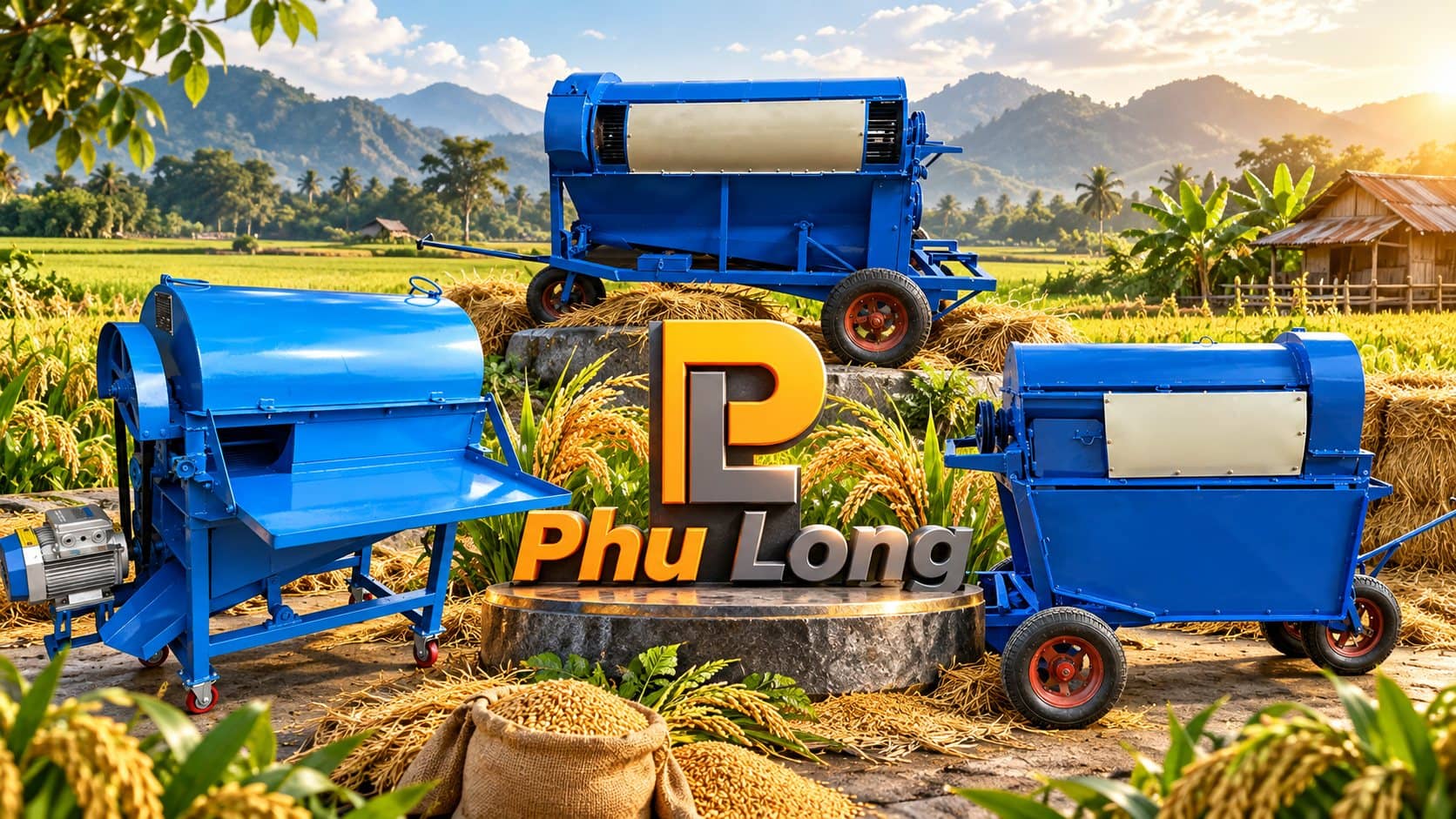
PL800 — single farms and remote plots
At 75 kg and 1,000 × 700 × 1,000 mm, the PL800 can be carried by two or three people and moved on a small cart. It suits family farms, hilly or terraced fields, and areas where larger machines cannot reach. It is also a sensible first machine for markets moving from manual threshing.
PL1200 — medium farms and small service groups
At 290 kg and 1,700 × 1,100 × 1,500 mm, the PL1200 gives more than three times the output of the PL800 while staying manageable on field roads. It suits larger family farms, farmer groups sharing a machine, and small operators threshing for neighbours.
PL2000 — co-operatives and contract threshing
At 490 kg and 2,700 × 1,100 × 1,650 mm, the PL2000 is built for volume. Contractors who move from farm to farm through the season, co-operatives serving many members and large estates get the most from it. In contract work, every extra tonne per day is extra income, so higher capacity often pays back fastest here.
Other Factors to Consider
- Access — narrow bunds and soft fields favour lighter machines. Check how the machine will reach the field.
- Power — larger threshers need more engine power. Make sure your engine or tractor drive is matched to the model.
- Labour — a high-capacity thresher needs enough people to cut, carry and feed the crop. Without them, the machine waits and its capacity is wasted.
- Transport — for contractors, how quickly the machine can be moved and set up matters as much as its hourly rate.
- Spare parts — keep belts, bearings and screen panels in stock before the season starts.
For Distributors
Many dealers stock two sizes: the PL800 for smallholders and either the PL1200 or PL2000 for co-operatives and contractors. All three models have an MOQ of 1, so a mixed first order is easy.
Tell us your market, typical farm sizes and harvest season on WhatsApp at +84 946 964 669, or use our quote form, and we will help you plan the right mix.