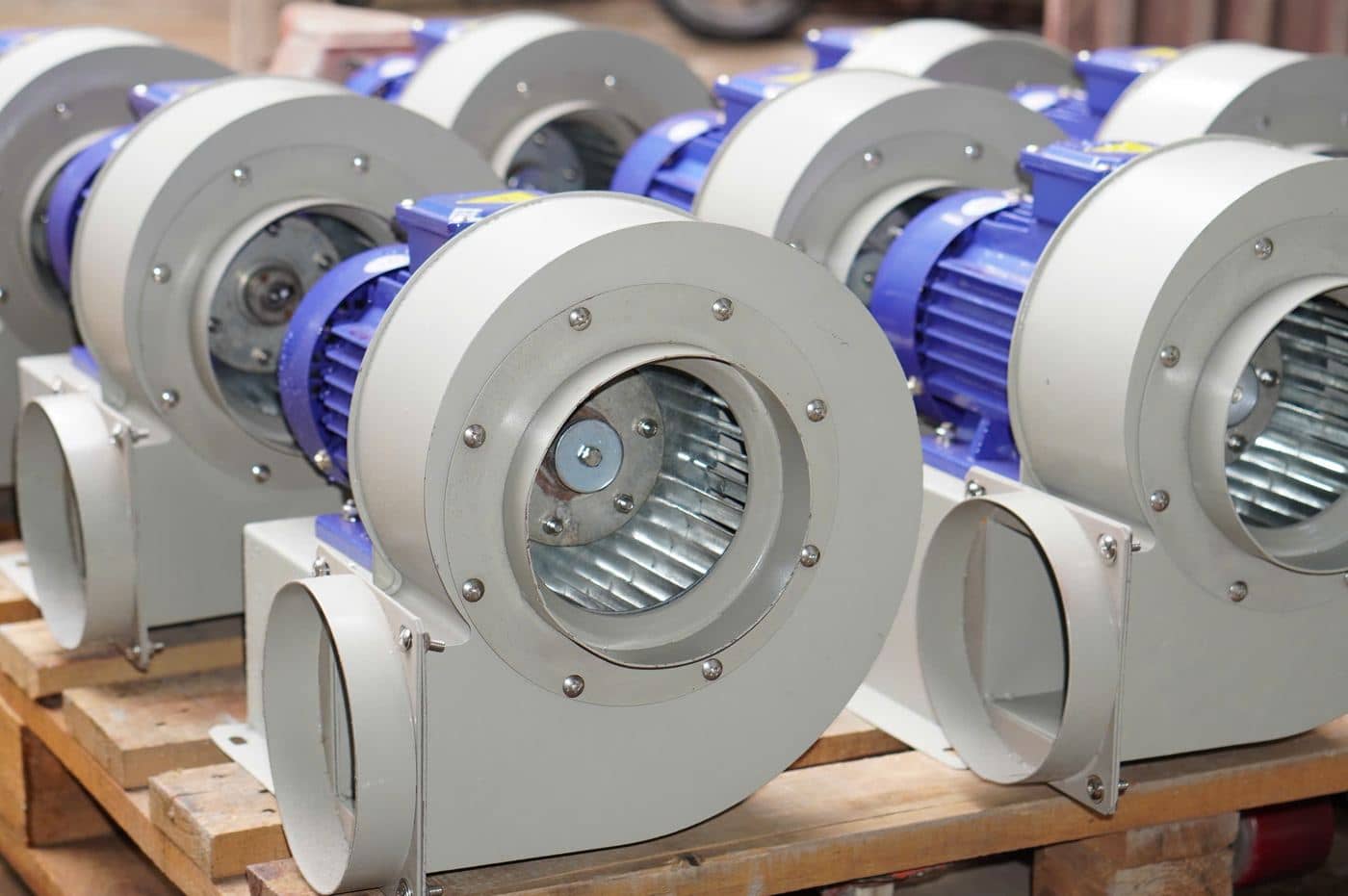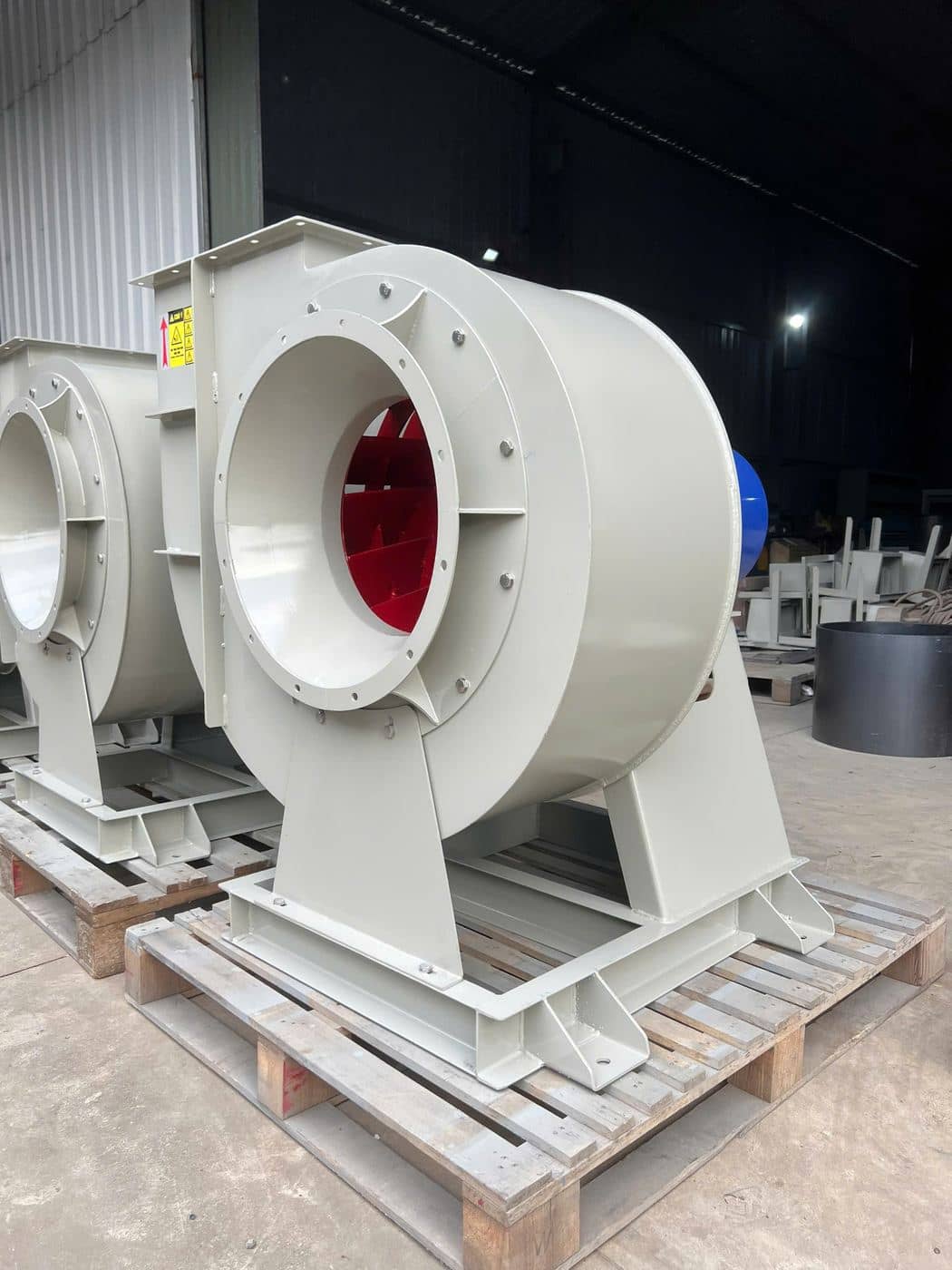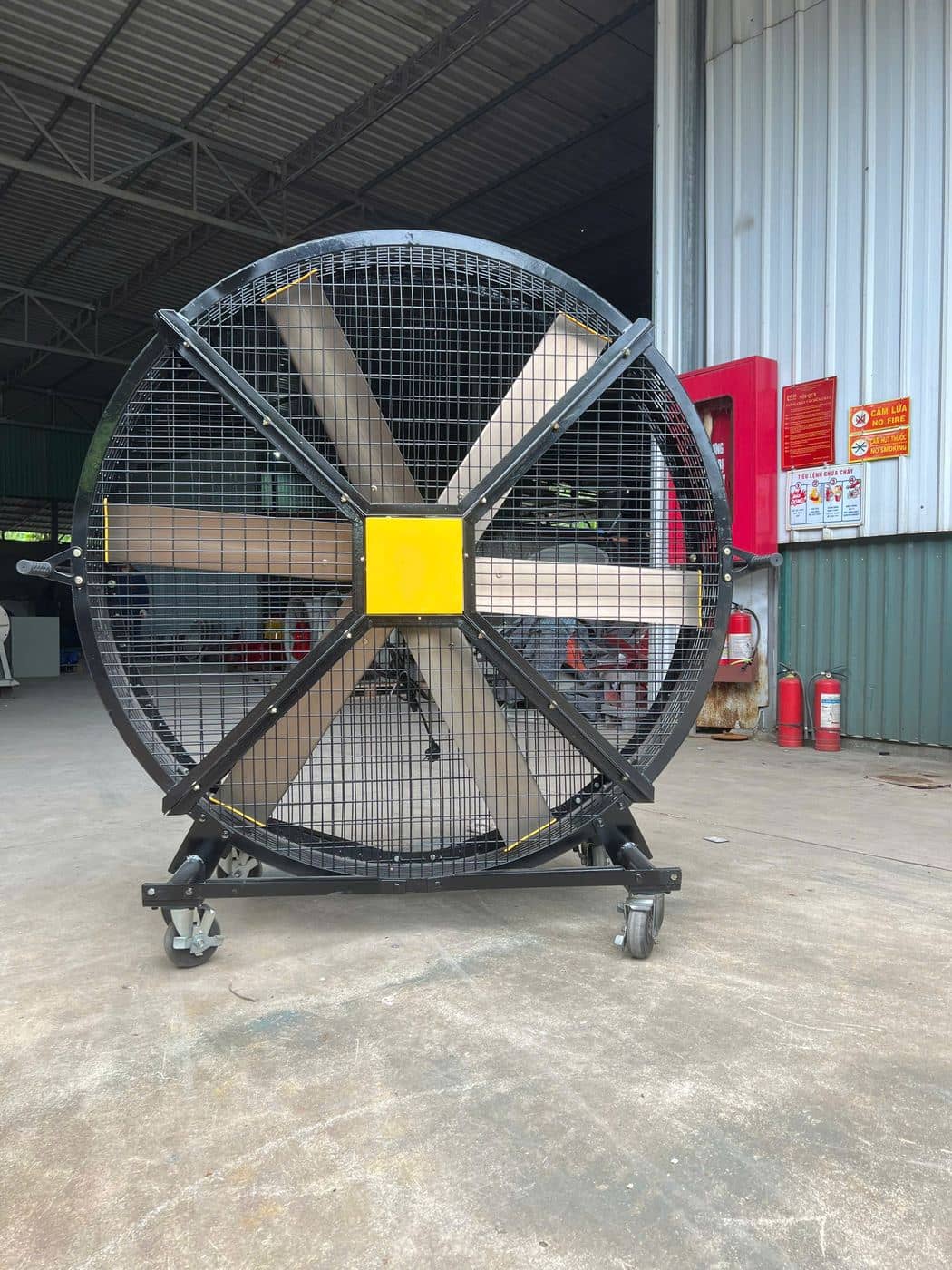
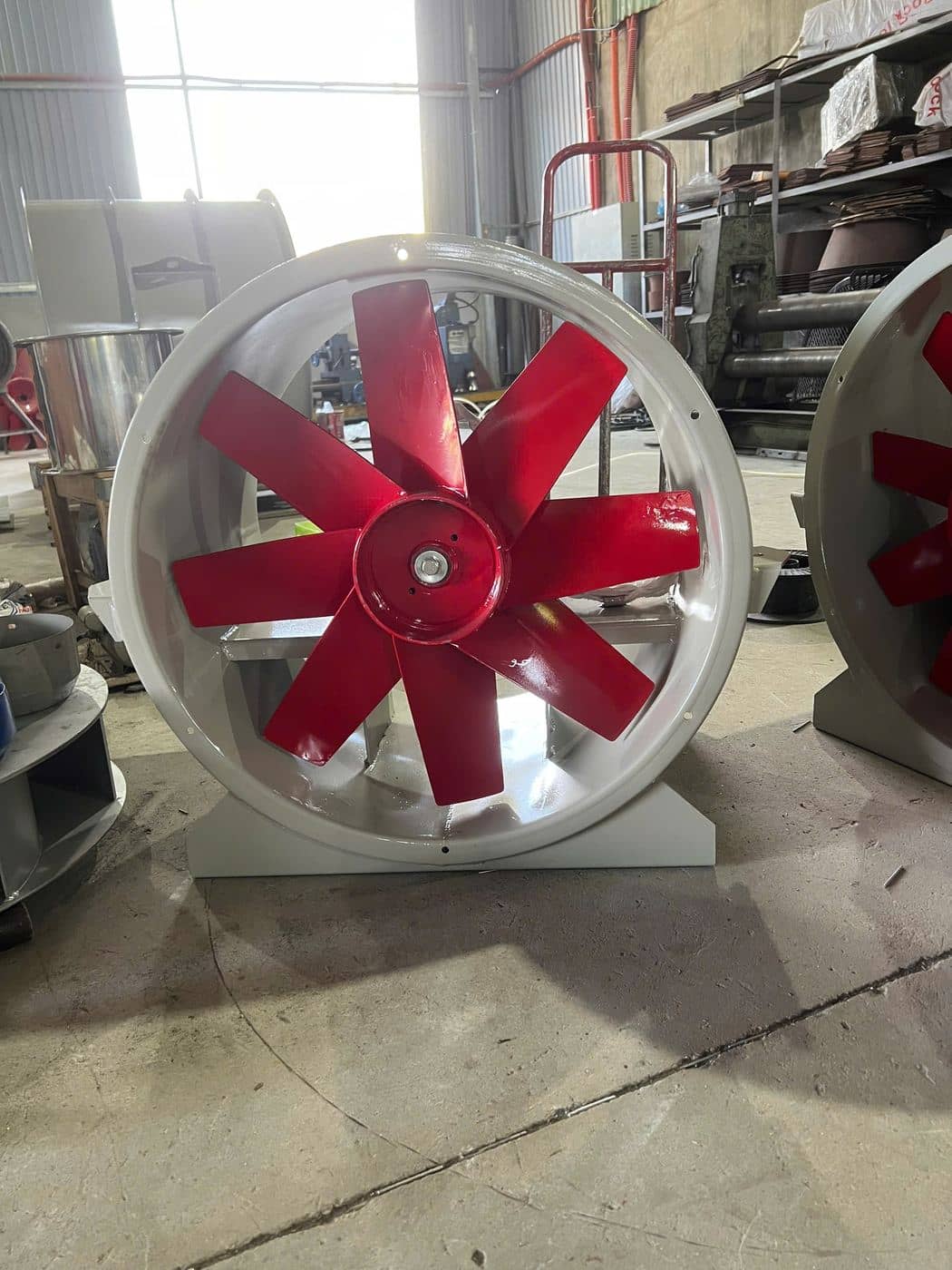
Two fans can have identical airflow and pressure and still last very different lengths of time. The difference is often the material. Our centrifugal and axial fans — PLCF 101, PLCF 121, PLCF 152 and PLAX 204 — are available in SS400 steel or SUS 304 stainless steel. Here is how to decide.
What Is SS400?
SS400 is a general structural carbon steel defined in the Japanese standard JIS G3101, widely used for frames, plates and machinery. It is strong, easy to cut, roll and weld, and cost-effective.
Its weakness is corrosion. Bare carbon steel rusts in the presence of moisture and oxygen, and faster still with salt, acids or other chemicals. That is why SS400 fans are protected with paint or other coatings.
SS400 is a good choice for:
- General ventilation in dry or moderately humid buildings
- Warehouses, workshops and construction sites
- Clean or mildly dusty air at normal temperatures
- Projects where budget is the main constraint
What Is SUS 304?
SUS 304 is the Japanese designation for type 304 austenitic stainless steel, containing roughly 18% chromium and 8% nickel. The chromium forms a thin, self-repairing oxide layer on the surface that protects the steel from rust without any coating.
SUS 304 is a good choice for:
- Humid or wet environments, such as laundries, swimming pool halls and areas that are washed down
- Food processing, beverage plants and commercial kitchens, where hygiene matters and paint flakes are unacceptable
- Mildly corrosive fumes, including many found in drying, pharmaceutical and light chemical processes
- Installations where long service life and low maintenance justify a higher upfront price
Know the Limits of 304
Stainless does not mean indestructible. Type 304 can suffer pitting and crevice corrosion in environments with chlorides — sea air, salt spray, swimming pool chemicals and some cleaning agents — particularly at higher temperatures. Strong acids and some chemical fumes can also attack it.
If your fan will handle highly corrosive gases or work in a coastal or chloride-rich environment, tell us exactly what is in the air. A higher-alloy grade, a special coating or a different material may be needed, and we will tell you honestly whether we can supply it.
Coatings on Carbon Steel
A well-applied coating extends the life of an SS400 fan considerably. When comparing offers, ask:
- How is the surface prepared before painting?
- What type of paint system and how many coats?
- Are the inside of the housing and the impeller coated, not just the outside?
Remember that any coating can be damaged by impact, abrasion or cleaning, and rust starts at the damaged spot. Inspect coated fans regularly and touch up chips quickly.
Cost Trade-Offs
SUS 304 costs more than SS400, both as a raw material and in fabrication. To compare fairly, look at the total cost over the fan's life:
- Purchase price — lower for SS400
- Maintenance — repainting and rust repair for SS400; little for SUS 304 in suitable conditions
- Replacement — a corroded impeller or housing means downtime and a new part
- Risk — contamination from rust or paint flakes can be costly in food and pharmaceutical plants
In a dry warehouse, SS400 is usually the sensible choice. In a wet, hygienic or mildly corrosive environment, SUS 304 often pays for itself.
A Middle Path
In some applications, only the parts in contact with the airstream need stainless steel. Ask whether a stainless impeller and housing with a carbon steel base or frame suits your project.
Questions We Will Ask
- What does the fan handle: clean air, steam, grease, dust or chemical fumes?
- What is the temperature and humidity?
- Is the fan indoors, outdoors or near the coast?
- Will it be washed down?
Send us those details on WhatsApp at +84 946 964 669 or through our quote form, and we will recommend the material and quote the fan.