"Will an automatic stirrup bender pay for itself?" The honest answer depends on your wages, your volumes and how much steel you lose today. Instead of quoting someone else's numbers, this guide gives you a simple calculation you can fill in with your own.
Step 1: Count Your Stirrups
Start with the quantity. From your drawings or past projects, estimate:
- N = number of stirrups per month (or per project)
- L = average cut length of bar per stirrup, in metres (perimeter plus hooks)
- d = bar diameter, in mm
You can convert length to weight with the standard formula for steel bar: weight per metre (kg/m) ≈ d² ÷ 162. That gives roughly:
- 6 mm → 0.222 kg/m
- 8 mm → 0.395 kg/m
- 10 mm → 0.617 kg/m
So steel used per stirrup = L × kg/m. For example, a stirrup with a 0.7 m cut length in 8 mm bar weighs about 0.7 × 0.395 = 0.28 kg.
Step 2: Manual Labour Cost
Time your own crew. Measure how many finished stirrups one worker produces in a full day, including measuring, cutting, bending and stacking.
- Pm = stirrups per worker per day (manual)
- W = daily cost per worker (wage plus any meals, transport, insurance)
Manual labour cost per month = (N ÷ Pm) × W
Use a realistic figure for Pm, measured over a whole day rather than a fast half hour.
Step 3: Machine Labour Cost
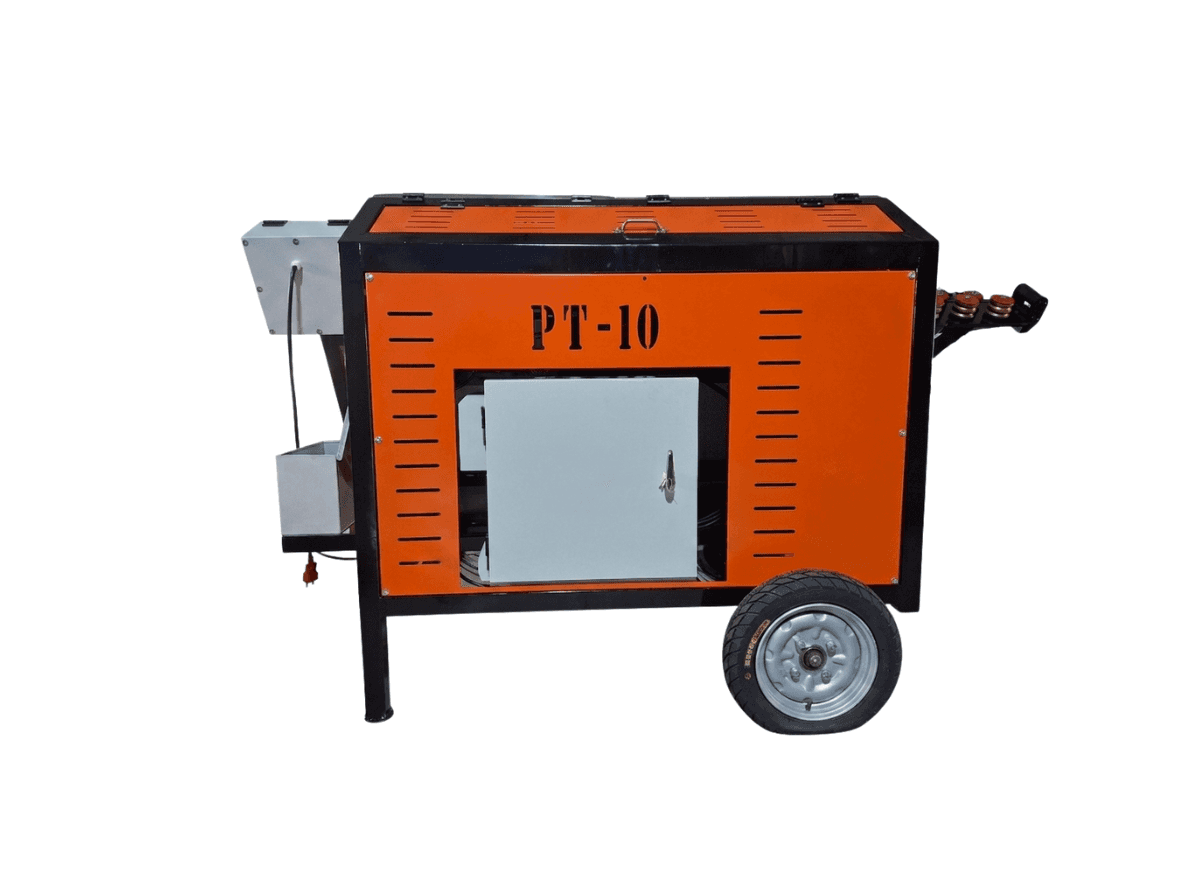
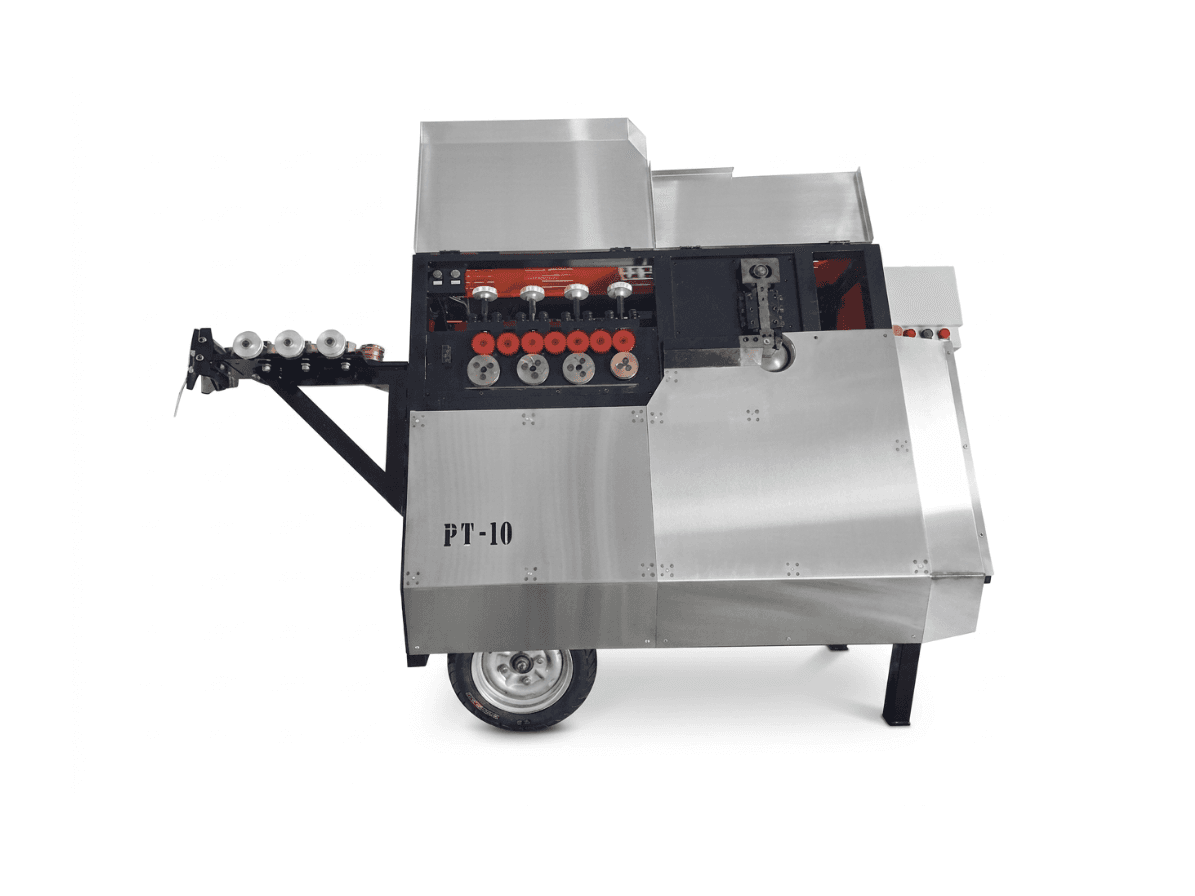
Our normal-motor machine is rated at 14–15 stirrups per minute on a 14 × 14 cm stirrup; the servo model is rated at 2.5–5 tons per day. Real output on your site will be lower than the rated speed once you include changing coils, setting programs and breaks, so estimate conservatively.
- Pa = stirrups per day you expect from the machine on your site
- K = number of people needed to run it (operator plus helper, if any)
Machine labour cost per month = (N ÷ Pa) × K × W
Step 4: Steel Waste
Manual bending produces offcuts and rejected pieces; automatic machines cut to programmed length and reduce mistakes. Estimate:
- Wm = waste rate with manual bending (%)
- Wa = waste rate with the machine (%)
- S = steel price per kg
Steel saving per month = N × L × kg/m × (Wm − Wa) × S
Measure Wm from your own scrap pile if you can: weigh the offcuts from one week and compare them with the steel issued.
Step 5: Running Costs
Do not forget what the machine costs to run:
- Electricity — the normal-motor model uses three 1.5 kW motors; your actual consumption depends on duty cycle
- Maintenance and wear parts — cutting blades, rollers, lubrication
- Operator training time at the start
Monthly running cost = electricity + maintenance
Step 6: Put It Together
- Monthly saving = (manual labour − machine labour) + steel saving − running cost
- Payback (months) = machine price landed on site ÷ monthly saving
Run the numbers for your busiest month and for an average month. If payback is short even in an average month, the decision is easy.
Benefits That Are Harder to Price
Some gains do not fit neatly into the formula but are real:
- Consistent dimensions — faster fixing of cages and fewer problems at inspection
- Less dependence on skilled benders — useful when experienced workers are scarce
- Lower injury risk from repetitive hand bending
- Capacity to take on bigger jobs without hiring a large bending crew
Choosing the Version
If your work is mostly standard column and beam stirrups in large quantities, the normal-motor model usually gives the fastest payback. If you need stirrups up to 1,200 mm, many shapes or tight tolerances, the servo PLC model with stored programs is the better fit. Both handle 6–10 mm plain and deformed bar.
Send us your N, L, bar sizes and wage level on WhatsApp at +84 946 964 669 or through our quote form, and we will help you check the numbers and quote the right machine.