An automatic stirrup bender is a robust machine, but it works with steel under force: rollers grip the bar, a blade shears it and a bending head swings it around. Good habits keep operators safe and keep every stirrup on size. This guide covers the routines we recommend to customers.
Know the Main Parts
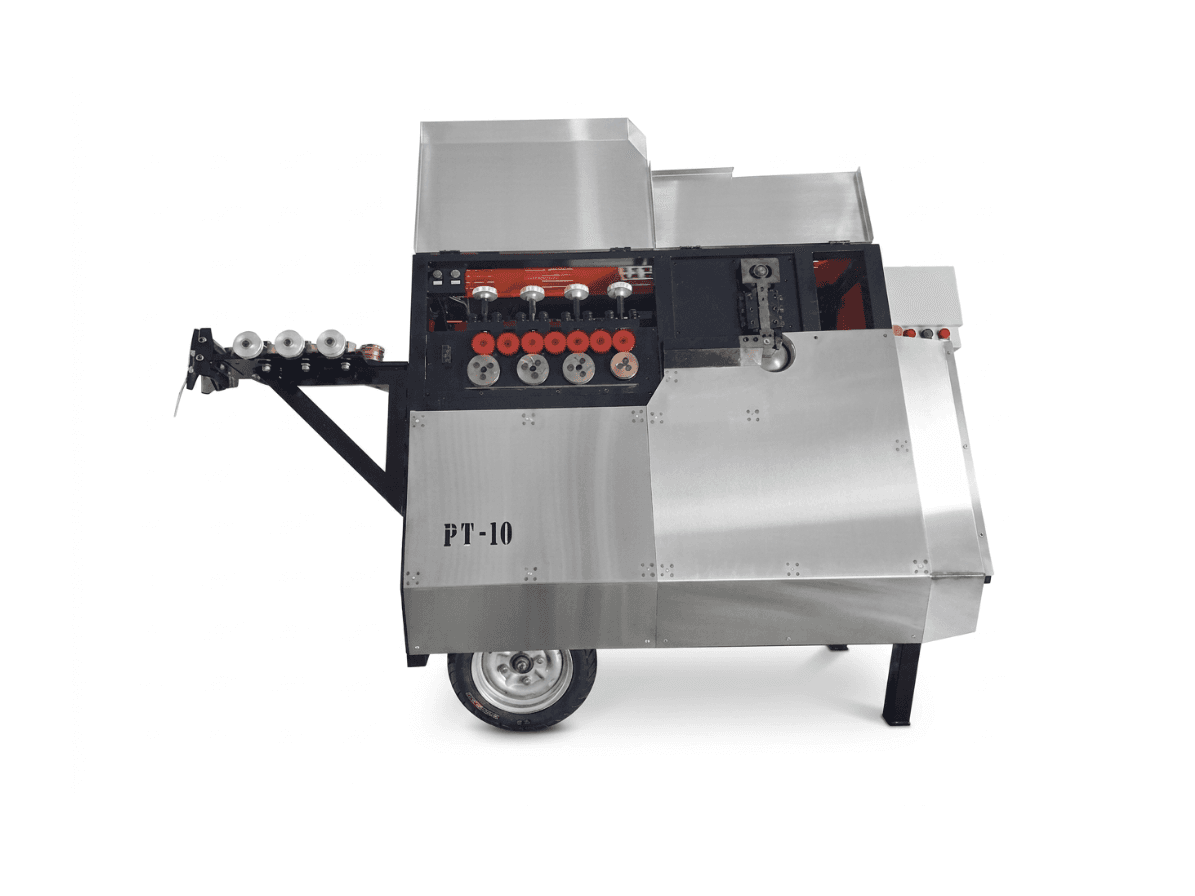
- Feeding and straightening rollers — grip the bar, pull it from the coil or rack and straighten it
- Cutting unit — shears the finished stirrup from the bar
- Bending head — rotates to form each angle
- Control panel — touchscreen on the normal-motor model; PLC with HMI touchscreen on the servo model
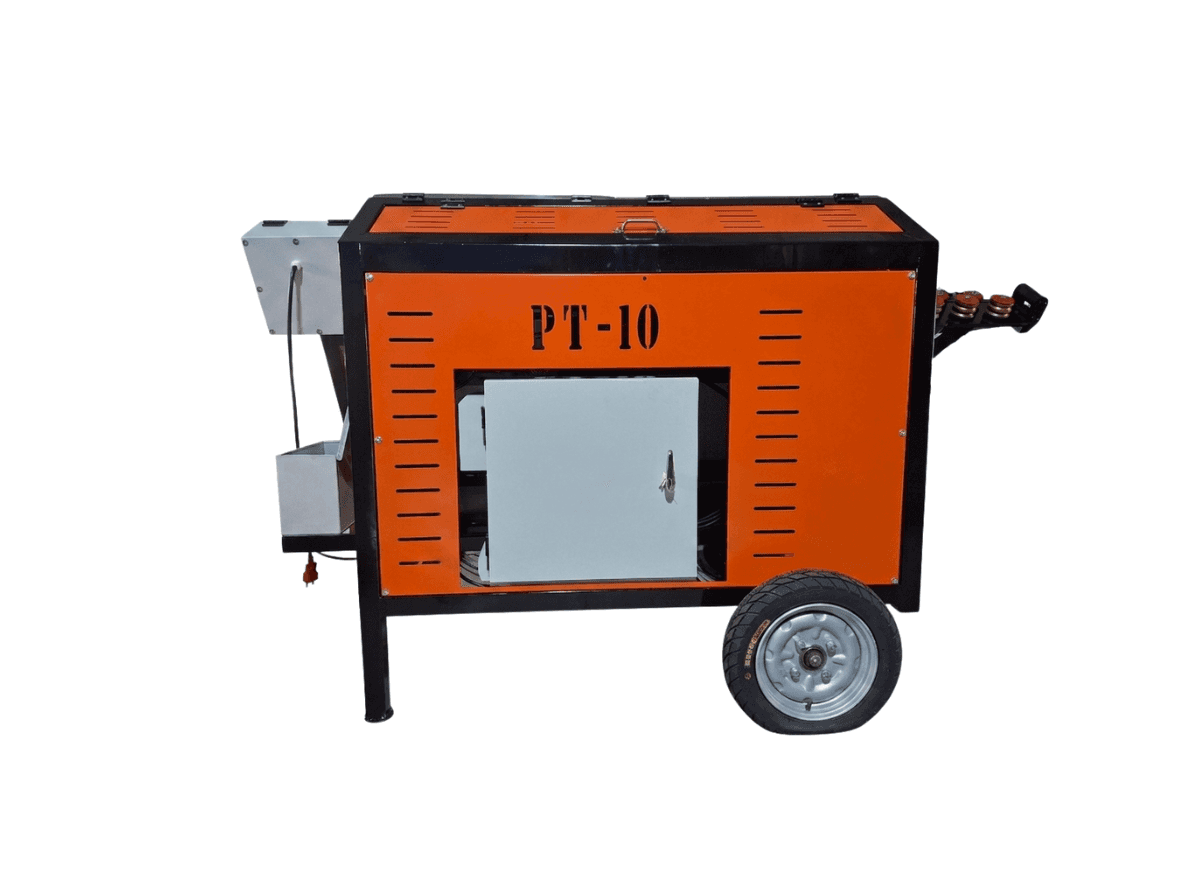
- Motors and electrical cabinet — the normal-motor model uses three 1.5 kW motors for feeding, cutting and bending
Safe Operation
Before starting:
- Place the machine on firm, level ground and keep the area around the feed and output clear.
- Check that guards and covers are fitted and the emergency stop works.
- Confirm the bar diameter is within the machine's range — 6 to 10 mm for both our models. Never force a larger bar through.
- Wear gloves, eye protection and safety boots; avoid loose sleeves, scarves or anything that can be caught.
While running:
- Keep hands away from the rollers, cutting point and bending head. Never reach in while the machine is running.
- Stand clear of the bending arc — the bar end swings as the stirrup forms.
- Do not straighten or clear a jammed bar with the power on. Stop, isolate and then clear it.
- Only trained operators should change programs or run the machine.
After work:
- Switch off and isolate the power supply before cleaning or adjusting anything.
Daily Checks
- Clean scale, rust flakes and dust from the rollers, bending head and cutting area. Steel scale is abrasive and speeds up wear.
- Check the first piece: after start-up, and every time you change bar size or shape, measure a test stirrup and adjust if needed.
- Listen and look for unusual noise, slipping bar or burrs on the cut end.
- Check the auto-stop on the servo model, which stops the machine when the steel runs out.
Feeding and Straightening Rollers
Rollers that are worn or set with the wrong pressure let the bar slip, which shows up as stirrups that are too short or not square. Check roller grooves for wear and flat spots, set the pressure to match the bar size, and replace worn rollers in pairs so they grip evenly.
Cutting Blade
A sharp blade gives a clean, square cut. A dull blade leaves burrs, needs more force and stresses the cutting motor. Inspect the cutting edge regularly, rotate or regrind it if the design allows, and replace it when chipped. Keep a spare blade on site so a worn one never stops production.
Bending Head
Check the bending pin and mandrel for wear and looseness. Worn parts change the bend radius and angle, so stirrups drift out of shape even though the program has not changed. Tighten fixing bolts and replace worn pins.
Lubrication
Lubricate moving parts — gear trains, bearings, slides and pivot points — according to the machine's manual. Wipe away old grease mixed with scale before applying fresh grease; dirty grease acts like grinding paste. Do not over-grease parts near the rollers, where grease can make the bar slip.
Electrical Care
- Keep the electrical cabinet closed and dry, especially on outdoor sites.
- Inspect cables for cuts and crushed sections, particularly where they cross the ground.
- Make sure the machine is properly earthed.
- Check the supply voltage. Both our models run on 220 V single phase (the normal-motor model also has a 3-phase option); long extension cables and weak supplies cause voltage drop and motor overheating.
- Leave electrical repairs to a qualified electrician.
A Simple Maintenance Schedule
- Daily — clean, test piece, visual check, guards in place
- Weekly — lubrication, roller and blade inspection, bolt check
- Monthly — inspect bending head wear, electrical connections and cables
- As needed — replace blade, rollers and pins when worn
Spare Parts to Keep
Cutting blades, feed rollers, bending pins and a set of fuses or contactors cover most stoppages. Ordering them with your machine avoids waiting for an urgent shipment.
For spare parts, operator training questions or a quote on either model, contact us on WhatsApp at +84 946 964 669 or through our quote form.