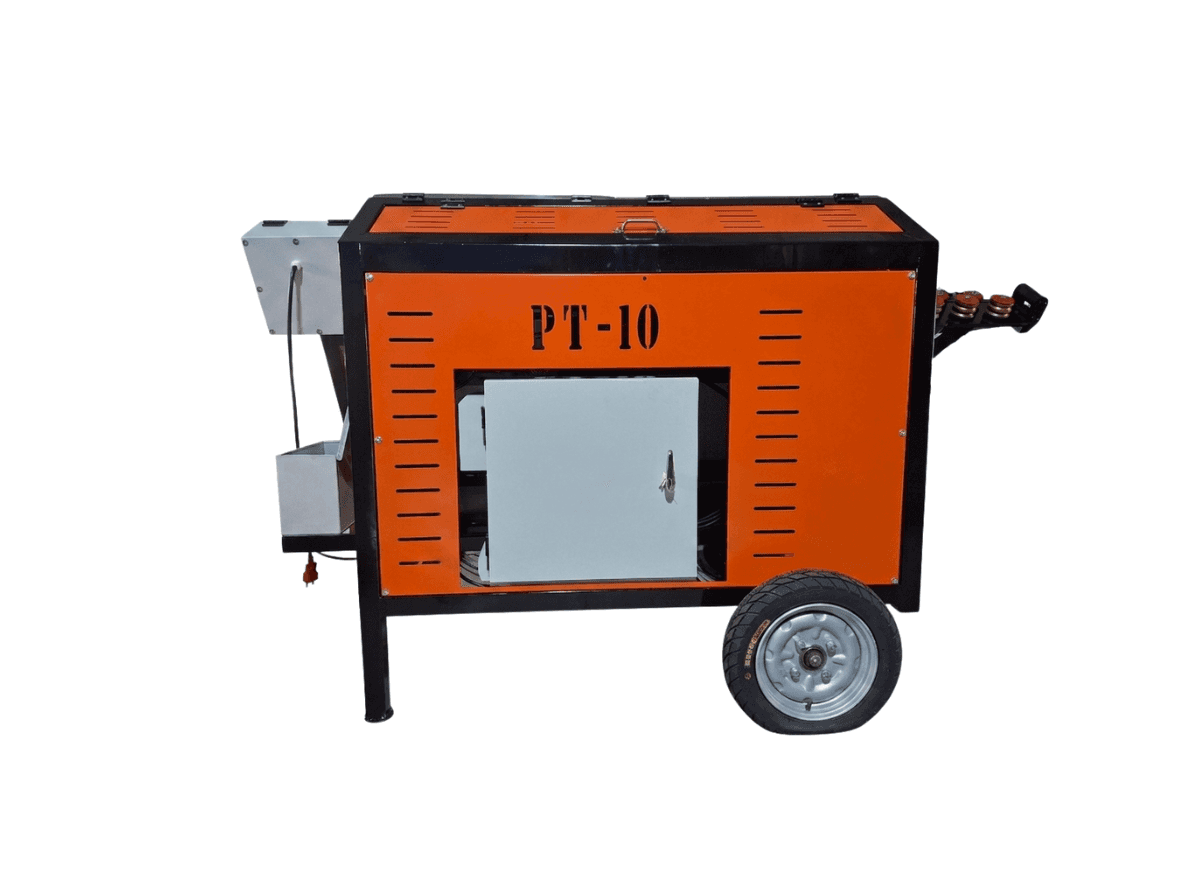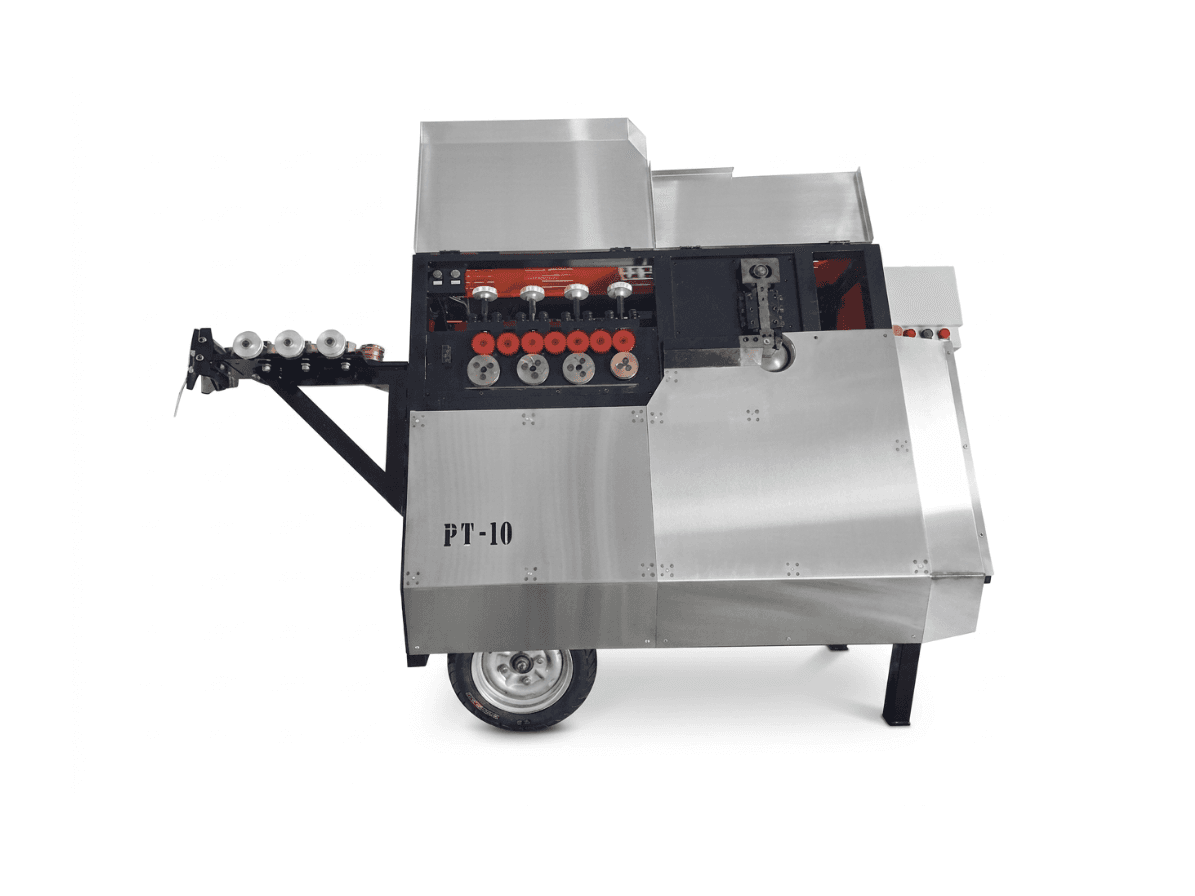
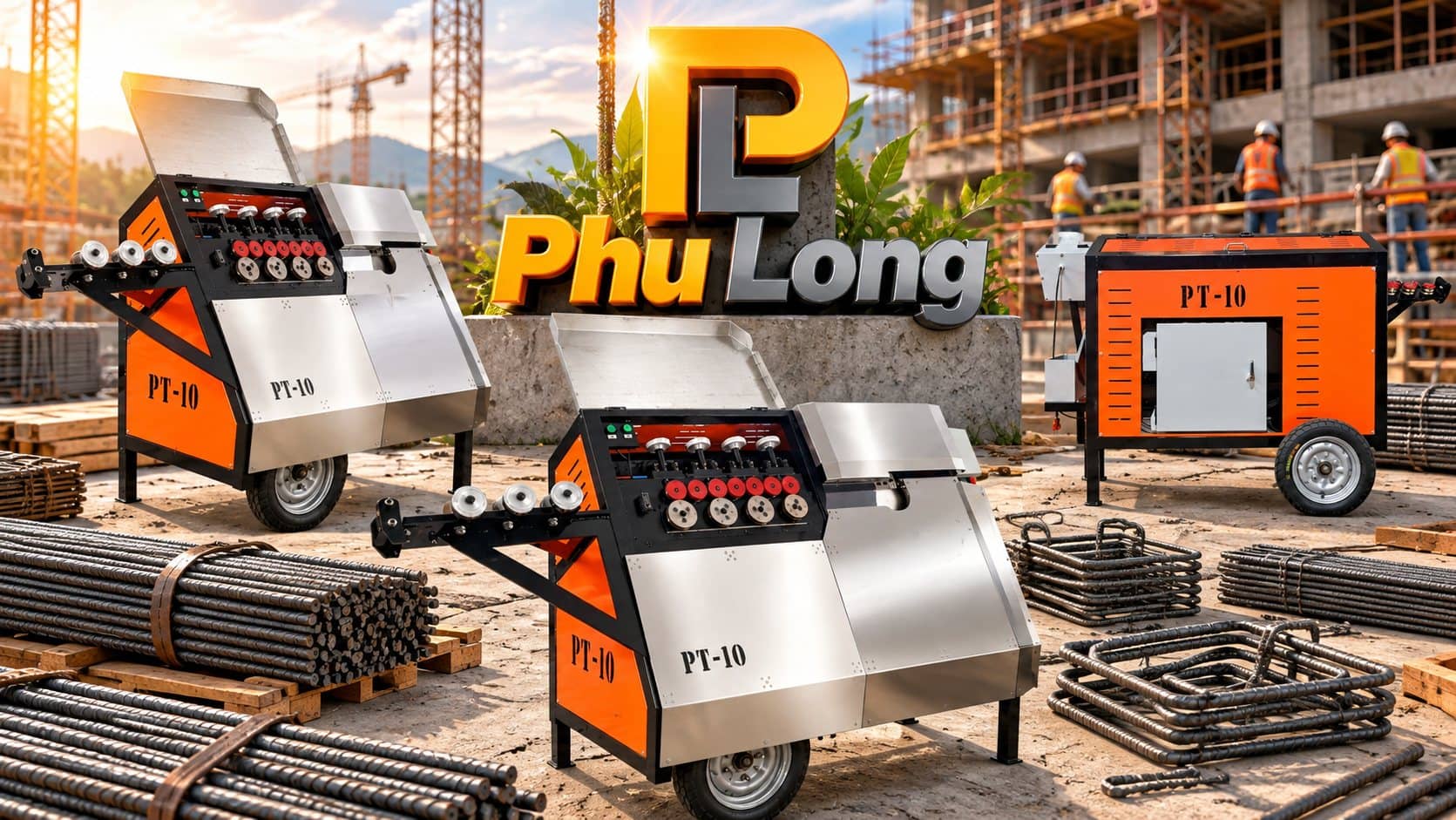
Every reinforced concrete column and beam needs stirrups, often thousands of them on a single floor. On many sites they are still bent by hand, one at a time. An automatic stirrup bending machine feeds, straightens, bends and cuts the bar in one cycle, and it changes the economics of rebar work quickly.
Why Manual Stirrup Bending Costs More Than It Looks
Hand bending looks cheap because the tools cost almost nothing. The real costs sit elsewhere:
- Labour time — each stirrup needs measuring, several bends and a cut. Output depends on the worker and falls as the day goes on.
- Inconsistent dimensions — a few millimetres of error per side adds up. Stirrups that are too big lose concrete cover; stirrups that are too small will not fit around the main bars.
- Offcuts and rework — mistakes are cut out and thrown away, and leftover bar ends pile up.
- Fatigue and injury — repetitive bending is hard on hands, wrists and backs.
What an Automatic Machine Does Differently
The operator enters the shape and dimensions on a touchscreen. The machine pulls bar from the coil or straight length, straightens it through rollers, makes each bend at the programmed angle, and cuts the finished stirrup. Every piece comes out the same, which makes fixing on site faster and inspection easier.
Because the bar is measured by the machine rather than marked by hand, cutting lengths are consistent and offcuts are reduced. On a large project, small savings per stirrup add up to a meaningful amount of steel.
Normal Motor Model
Our normal-motor stirrup bender is the workhorse version:
- Plain and deformed steel from 6 to 10 mm
- Shapes: V, rectangle, triangle, hexagon, spiral or custom
- Stirrup size from 7 cm up to 110 cm
- Three 1.5 kW motors for feeding, cutting and bending
- 14–15 stirrups per minute on a 14 × 14 cm stirrup
- 220 VAC single phase, with 3-phase as an option; 270 kg
It suits contractors and rebar yards producing large quantities of standard column and beam stirrups.
Servo Motor Model with PLC
The servo version targets precision and size range:
- Same 6–10 mm bar range, plain or deformed
- Shapes: square, rectangle, C-shape, triangle, spiral, round or custom
- Stirrup size from 55 mm up to 1,200 mm
- PLC programming with HMI touchscreen for storing and recalling shapes
- Auto stop when the steel runs out
- Productivity of 2.5–5 tons per day; 220 V single phase; 250 kg
Servo drives position each bend more accurately than a standard motor, which matters for large or unusual shapes and for projects with tight dimensional checks.
How to Choose
- High volume of standard stirrups — the normal-motor model gives strong output at a lower price.
- Large stirrups, many shapes, or strict tolerances — the servo PLC model is the safer choice.
- Weak or unstable power supply — both run on 220 V single phase; ask us about the 3-phase option for the normal-motor model.
- Rental fleets and rebar workshops — the servo model's stored programs make job changeovers faster.
Practical Tips for Site Use
- Keep feeding rollers clean and check them for wear; worn rollers cause slipping and length errors.
- Run a test piece and measure it each time you change bar size or shape.
- Train two operators per machine so production does not stop when one is absent.
Not sure which version fits your market? Send us your typical bar sizes and stirrup dimensions on WhatsApp at +84 946 964 669, or use our quote form, and we will recommend a configuration.