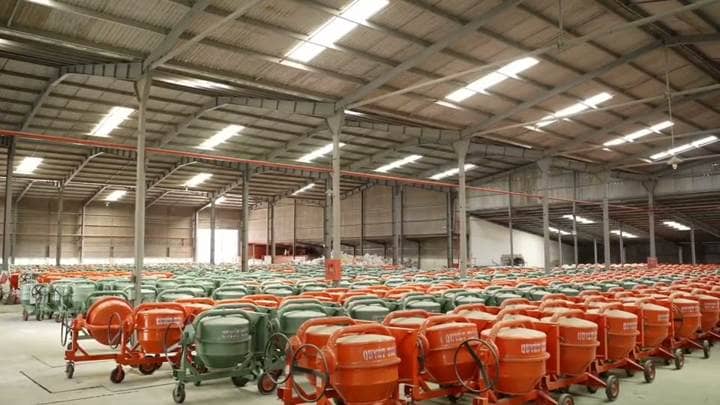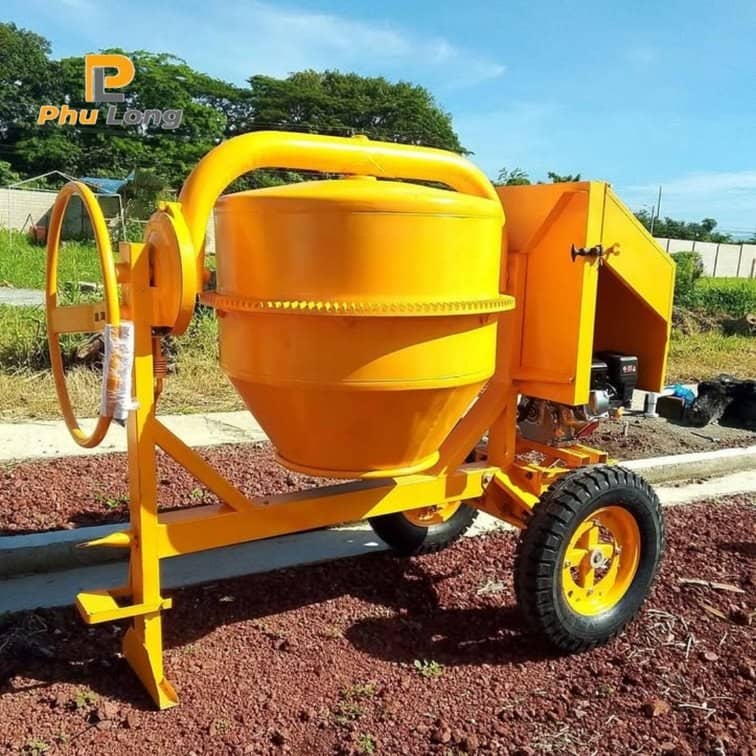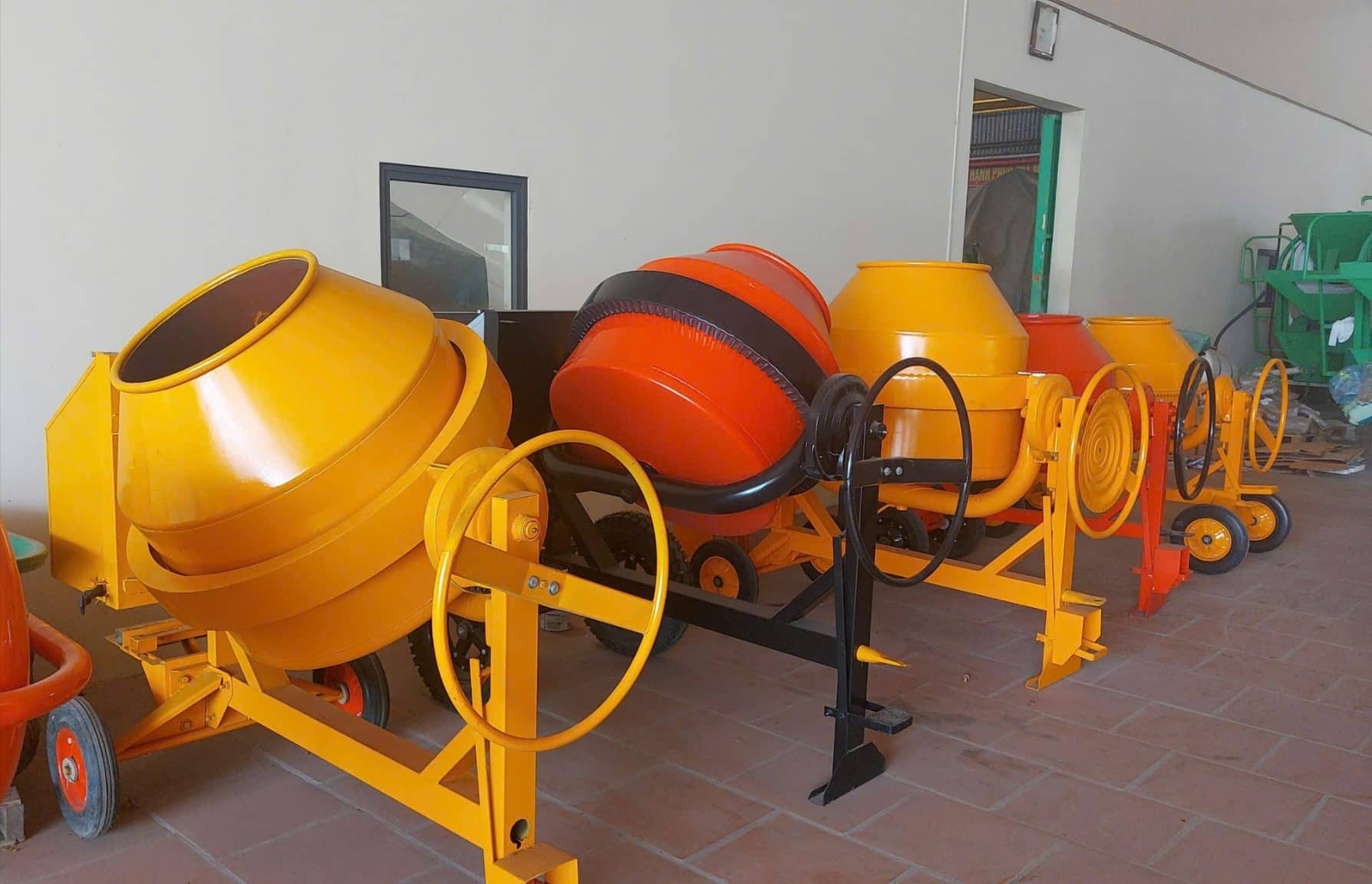
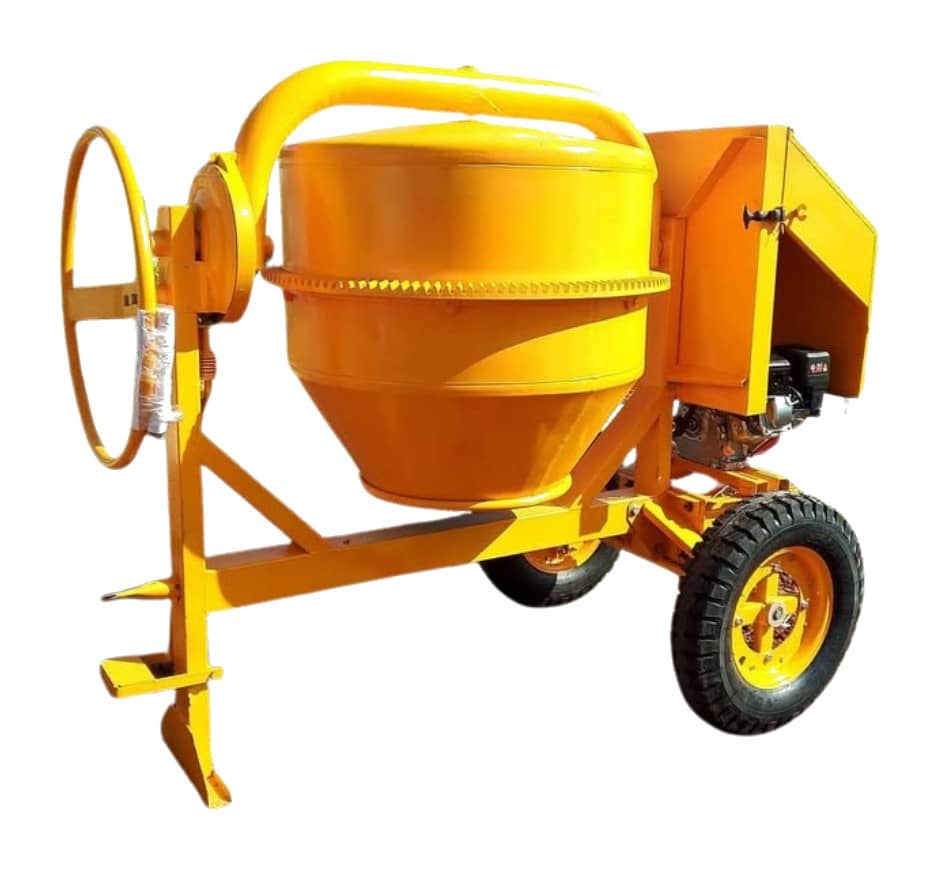
A drum mixer's capacity is printed on the brochure, but the concrete that comes out of each batch is a different number. Understanding the gap — and loading the drum the right way — gives you stronger concrete, less waste and a machine that lasts longer.
Drum Capacity Is Not Batch Size
The litre figure in a mixer's name, such as 350 L, describes the drum. A tilting drum mixer cannot be filled to the brim: the material needs room to fall and fold as the drum turns, and the mouth must not spill when tilted.
As a practical guide, the usable batch of mixed concrete is roughly 60–65% of the drum capacity. For our range that means approximately:
- 250 L drum → about 150–160 L per batch
- 350 L drum → about 210–225 L per batch
- 450 L drum → about 270–290 L per batch
- 500 L drum → about 300–325 L per batch
Plan the day around this figure. One cubic metre is 1,000 L, so a 350 L mixer needs around five batches per cubic metre.
Common Site Mix Ratios
Small sites often use nominal mixes measured by volume, written as cement : sand : coarse aggregate. Typical examples you will see in site practice:
- 1 : 1.5 : 3 — a richer mix, often used for structural members such as slabs, beams and columns
- 1 : 2 : 4 — a general-purpose mix for footings, floors and paths
- 1 : 3 : 6 — a lean mix for blinding layers and mass fill
These are general rules of thumb, not a design. For anything structural, follow the mix specified by your engineer or local standard, which also sets the water–cement ratio.
Measure with the same container every time — a bucket or a gauge box — rather than counting shovels. Shovel loads vary from person to person and from one end of the day to the other.
Watch the Water
Extra water makes concrete easier to place but weaker and more prone to cracking and shrinkage. Add water gradually and stop when the mix reaches the workability you need. If the concrete is too stiff, add a little at a time; it is easy to add water and impossible to take it out.
Remember that wet sand already carries water. On a rainy day, you will need less water in the drum.
The Right Loading Order
Load with the drum already turning. A sequence that works well with tilting drum mixers:
- Add about half of the water first, so the drum surface is wet and cement does not stick to the back.
- Add the coarse aggregate. It scours the drum and breaks up any lumps.
- Add the sand, then the cement.
- Add the remaining water slowly until the mix looks right.
Loading cement into an empty, dry drum causes it to cake on the blades and at the bottom of the drum, and the batch comes out uneven.
How Long to Mix
Once the last material is in, mix until the colour and consistency are uniform — typically a few minutes for a small drum mixer. Too short and you get streaks of dry cement or pockets of sand; much longer is not better and can lead to segregation and loss of workability in hot weather. Keep the time consistent from batch to batch so every load is the same.
Tips for a Better Day on Site
- Set the mixer level and close to the pour to reduce carrying time.
- Keep cement bags dry and off the ground.
- Discharge fully between batches; leftover concrete changes the next mix.
- Clean the drum at breaks and at the end of the day while it is still wet.
Matching Mixer Size to the Job
If your crew regularly waits for the mixer, step up a size. If the mixer waits for wheelbarrows, a bigger drum will not help — add labour or shorten the carry. Our range runs from 250 L to 500 L, with electric, gasoline or diesel power.
Need help choosing a size for your typical pours? Send us your daily volume and site conditions on WhatsApp at +84 946 964 669 or through our quote form.