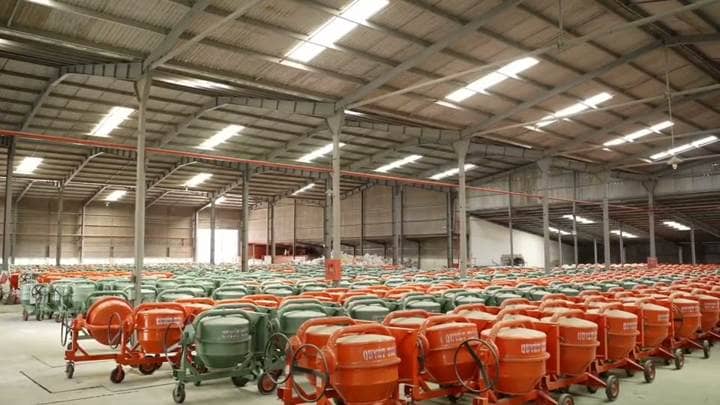
Concrete mixers are a steady product for construction equipment dealers: builders, small contractors and rental shops all need them, and they come back for parts and replacements. The dealers who do well with mixers usually get a few decisions right from the start.
Start with a Focused Range
You do not need every model on day one. A focused range is easier to explain, stock and service. A common structure:
- Entry model (250 L) — for house builders, repairs and price-sensitive buyers
- Core model (350 L) — the all-rounder for small and medium contractors
- Heavy model (420–500 L) — for larger contractors and higher daily volumes
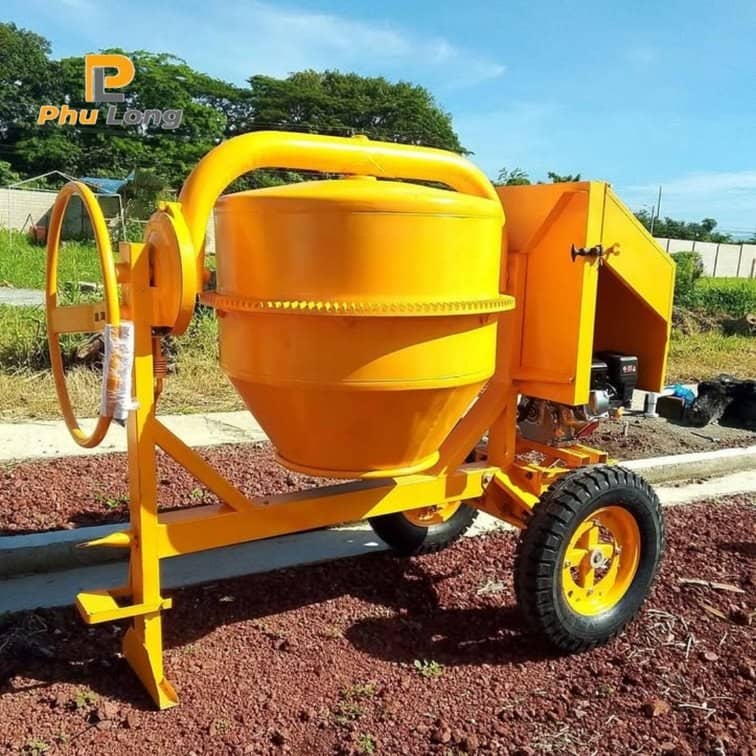
Across our range, drum capacity runs from 250 L to 500 L, with drum steel of 2–3 mm depending on the model. Within each size, you can offer the wheel and tyre setup your market prefers — solid tyres for low maintenance, pneumatic tyres for rough ground, and 2, 3 or 4 wheels.
Choose the Engine Your Market Can Support
The best engine is the one your customers can fuel and repair locally.
- Electric (2.2–5.5 kW, 220 V) — for cities and sites with reliable mains power
- Gasoline (GP160 / GP200) — portable and widely serviceable
- Diesel — for heavier use and areas where diesel is the common fuel
Ask local mechanics which engines they already know. A machine that can be fixed in town sells better than one that cannot.
Make It Your Brand with OEM
Selling under your own brand builds customer loyalty to you rather than to a factory name. On our mixers you can specify:
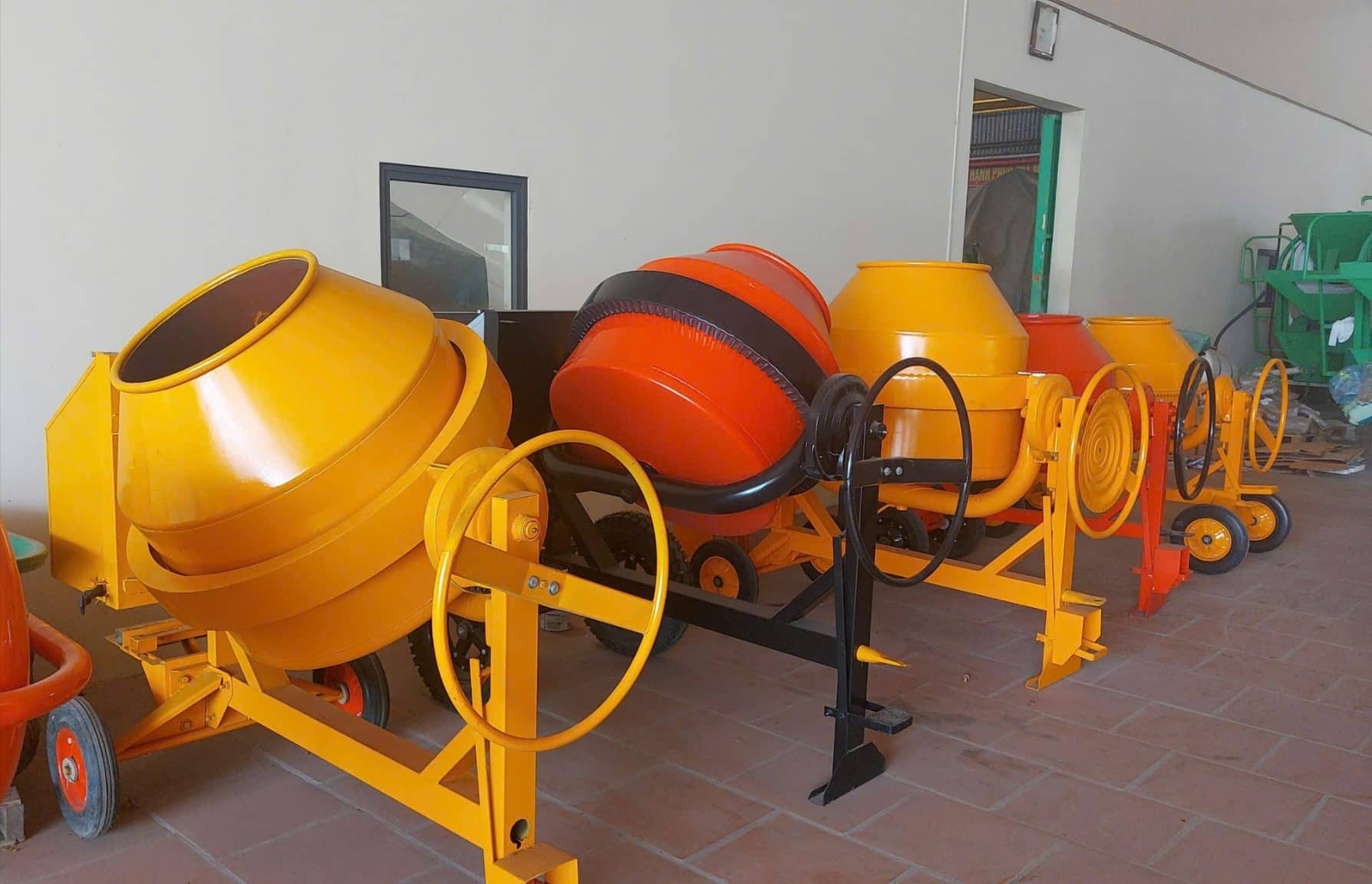
- Colour — yellow, orange, red, dark red, blue, green, grey, or a custom colour
- Logo and decals — your brand on the drum and frame
- Engine, wheels and tyres — matched to your market
- Drum thickness — for customers who want a heavier-duty drum
A consistent colour across your range makes your machines recognisable on every site in your area. Send your logo file and colour reference early so samples can be confirmed before production.
Stock the Right Spare Parts
Fast parts support is often what separates a one-time sale from a long-term customer. Parts worth keeping on the shelf:
- Gear ring and pinion — they wear over time, especially when greasing is neglected
- Mixing blades — wear from abrasive aggregate
- Bearings — for the drum and pivot points
- Drive belts — consumable on belt-driven models
- Tyres and wheels — both solid and pneumatic if you sell both
- Drums — for customers whose drum is damaged by hammering or accidents
- Engine service parts — filters, spark plugs, starter cords
Order a starter parts kit with your first container. It costs little extra in freight and avoids urgent shipments later.
Plan Mixed Containers
You can mix models, colours and engines in one container. MOQs on our mixers are 2–5 units per model depending on size, so a single container can carry your entire starter range plus spare parts. If you also sell wheelbarrows, adding them to the same container fills the space around the mixers.
Support Your Customers After the Sale
- Give every buyer a simple daily care sheet: clean the drum while wet, grease the gear ring, check belt tension and engine oil.
- Train your shop staff to recognise common issues — slipping belts, worn pinions, low engine oil.
- Keep a record of what each customer bought so you can suggest parts and upgrades.
Display and Demonstration
Mixers sell better when buyers can see them. Keep at least one machine assembled in your yard, show the drum thickness and gear, and run it so customers can hear the engine. A clean, branded display machine says more than a brochure.
Ready to build your range? Tell us your market, power supply and typical customers on WhatsApp at +84 946 964 669 or via our quote form, and we will suggest a starter mix of models and parts.