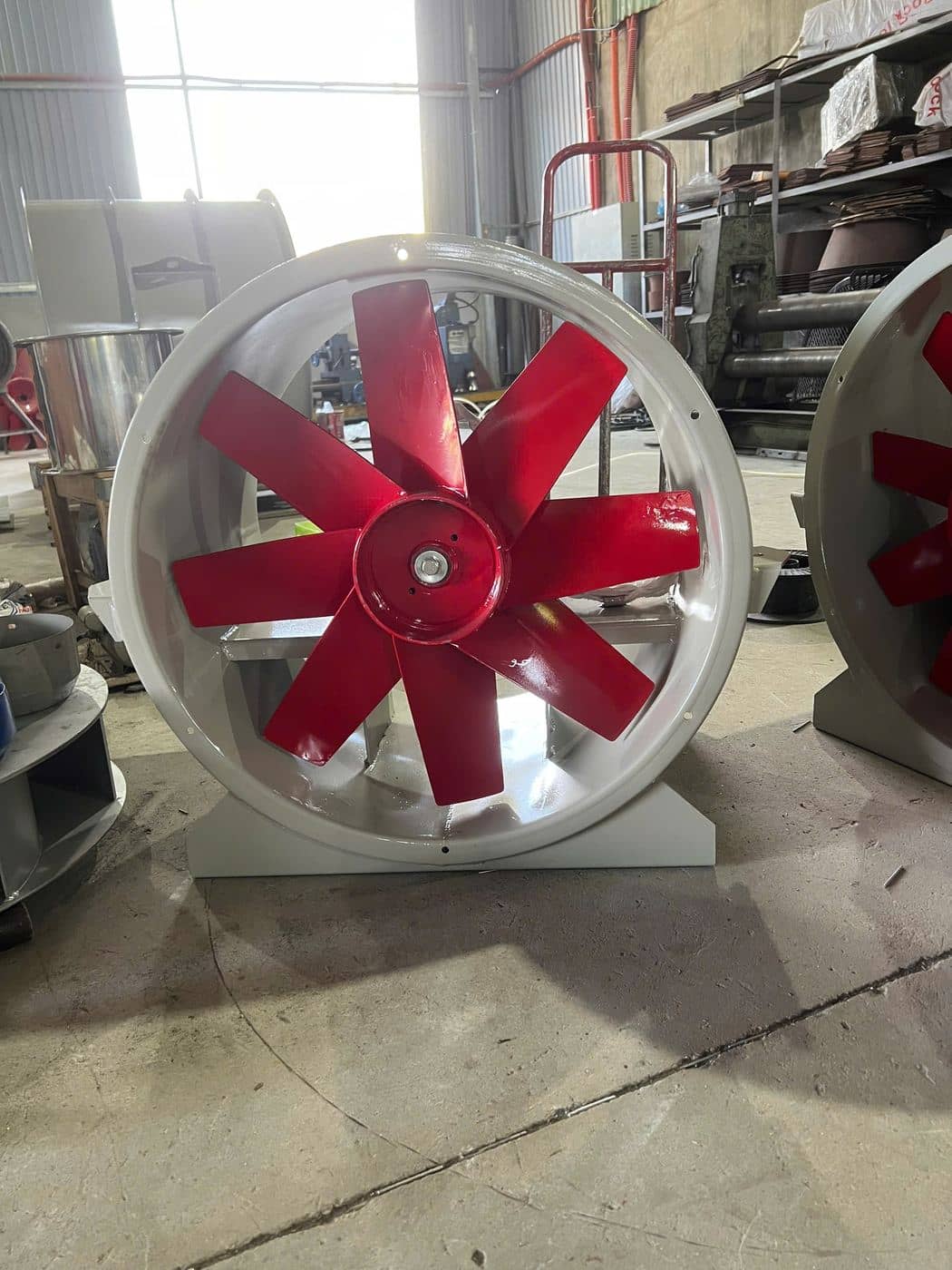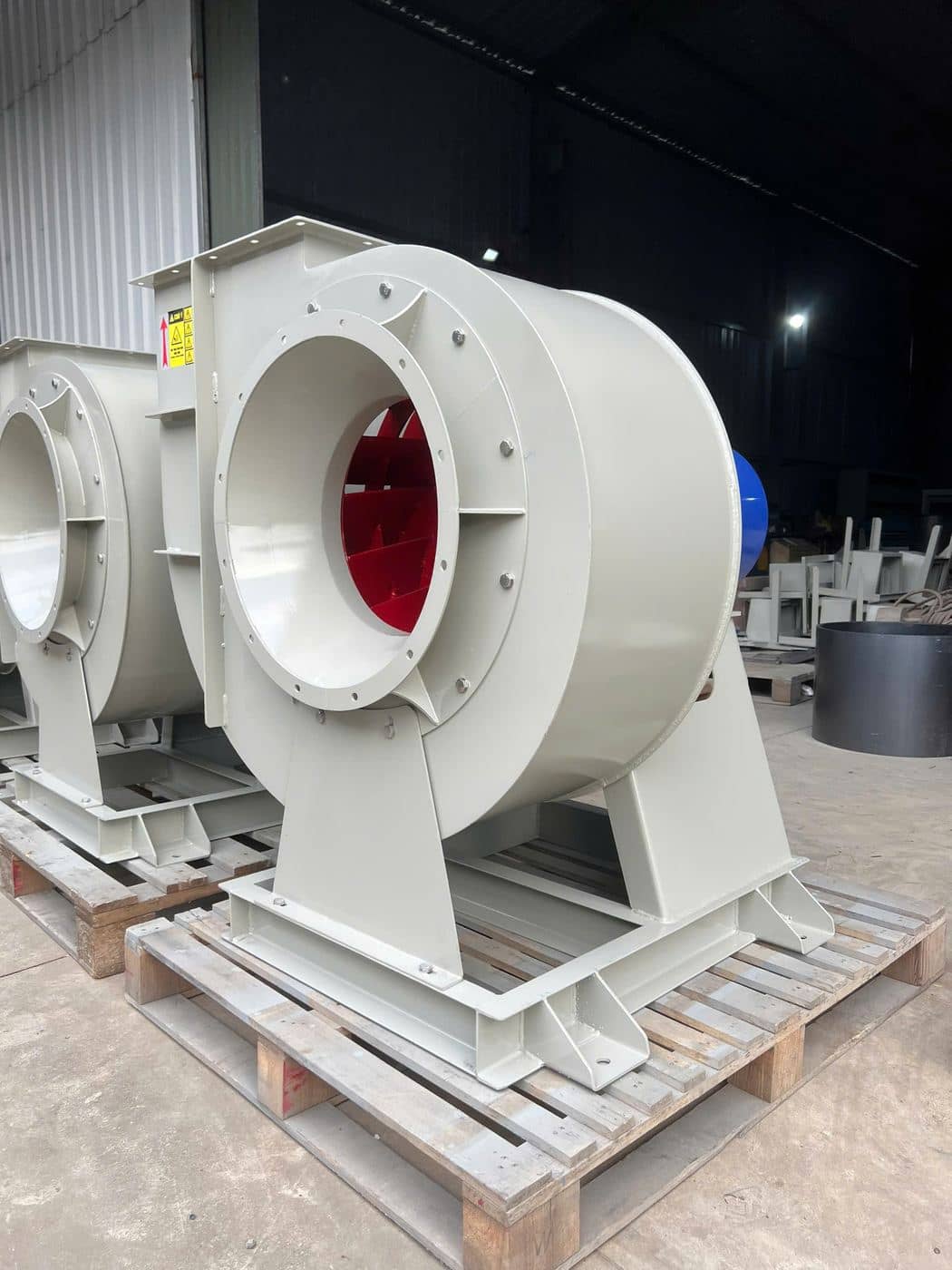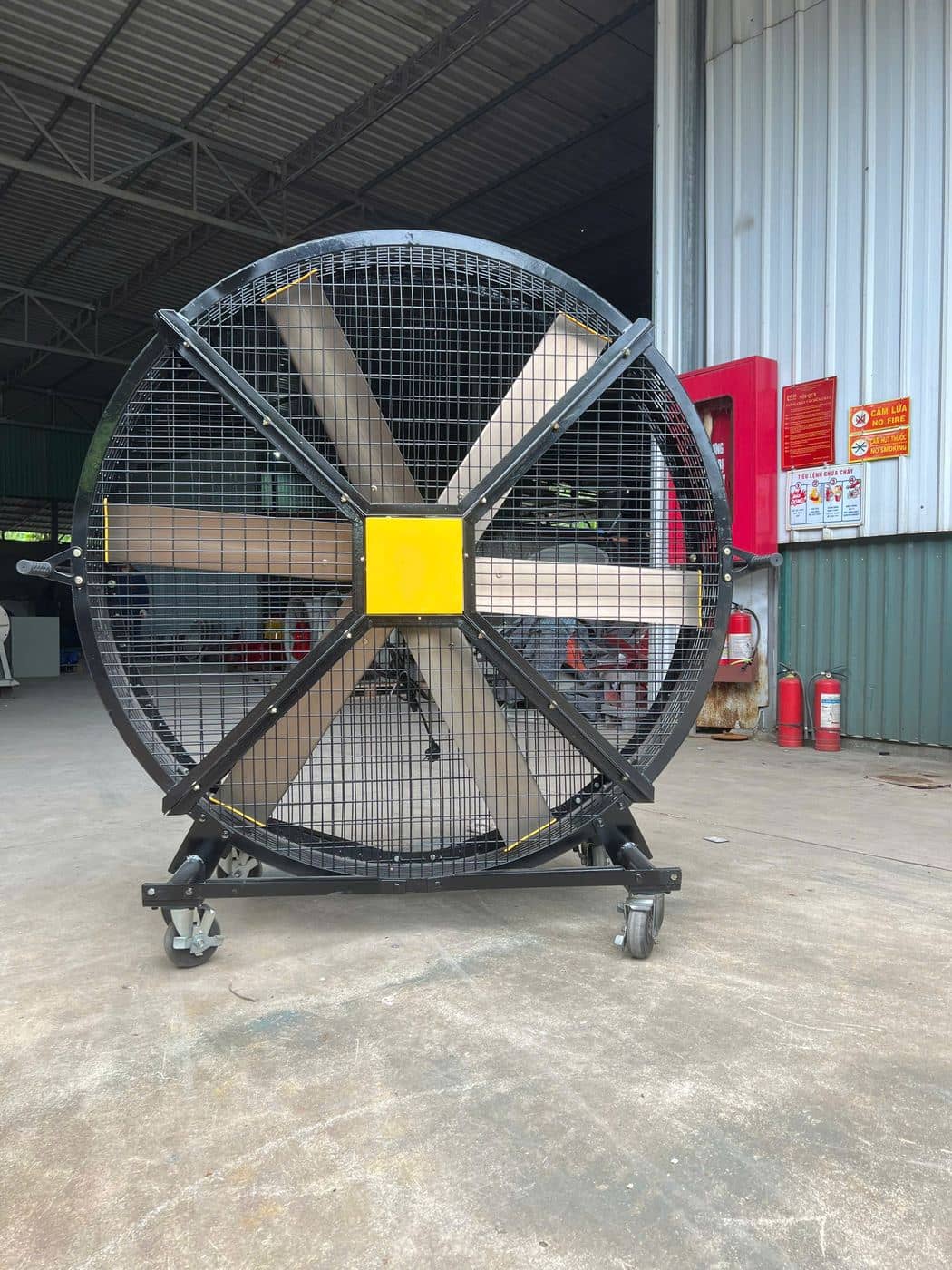
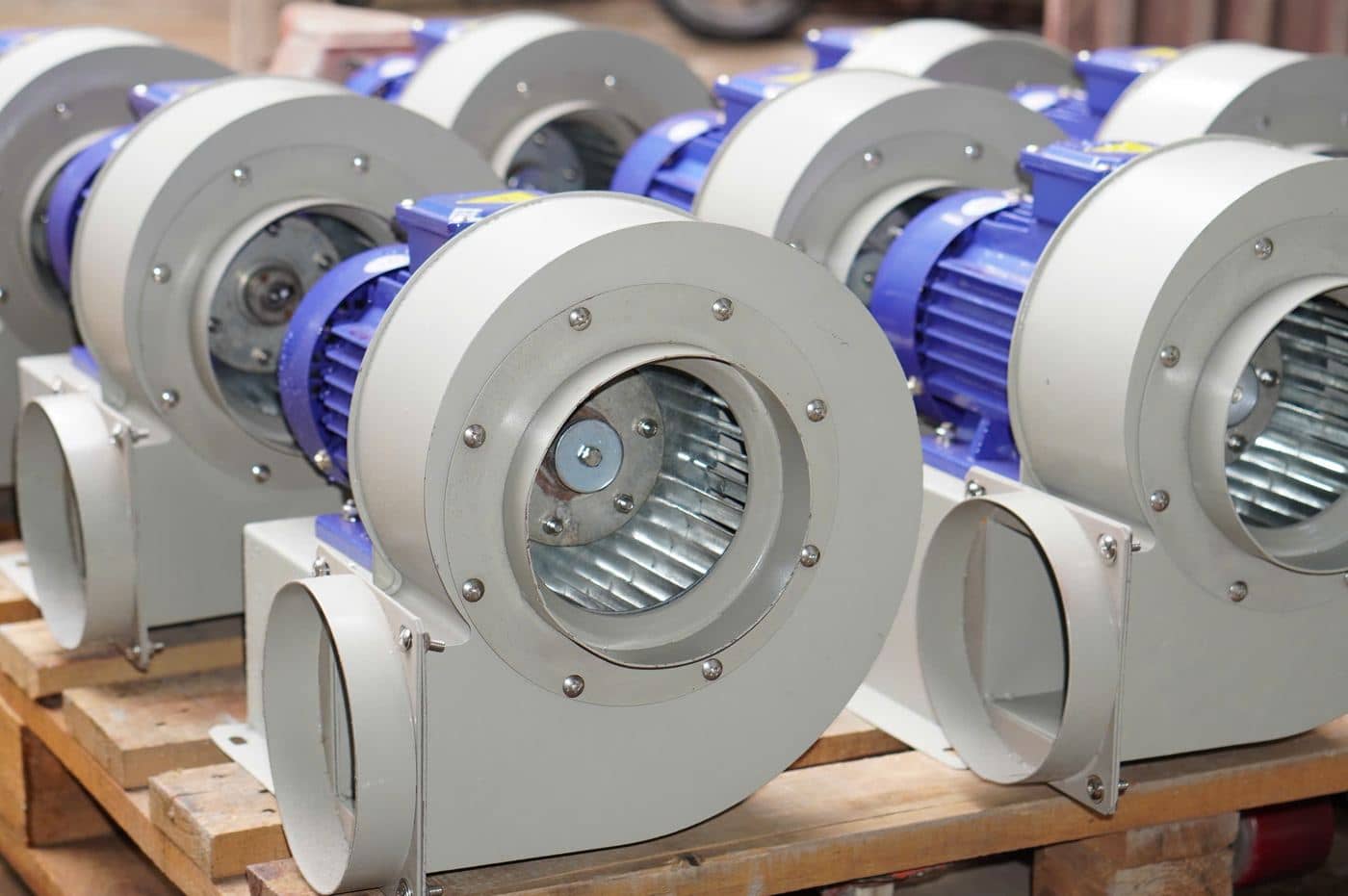
A commercial kitchen produces heat, steam, smoke, odour and grease-laden vapour all day. The exhaust fan has to pull all of that through a hood, filters and ductwork and push it outside — reliably, quietly and safely. That combination is why most kitchen exhaust systems use centrifugal fans.
Why Centrifugal Fans for Kitchens
A kitchen exhaust system is a high-resistance system. Air must pass through grease filters in the hood, along a duct with bends, sometimes through odour-control equipment, and out of a discharge. Each element adds pressure loss.
Axial fans move large volumes in open air but lose performance quickly against resistance. Centrifugal fans build much higher pressure, so they keep pulling the design airflow through filters and long ducts. They also cope better with warm, moist and greasy air.
Our PLCF 101 centrifugal fan with forward-curved blades is designed for this kind of duty: ventilation and odour extraction in hotels, restaurants, factories and public buildings. It covers 650–57,600 m³/h at 210–2,960 Pa, with motors from 0.25 to 55 kW, direct or belt drive, in SS400 steel or SUS 304 stainless.
The System: Hood, Filters, Duct, Fan
Hood — captures smoke and vapour at the source. It should overhang the cooking line so plumes do not escape. Hood size and the type of cooking (frying, grilling, steaming) largely decide the airflow you need, and your local code or hood supplier will give the method.
Grease filters — baffle filters in the hood remove much of the grease before it reaches the duct. Clean them frequently; clogged filters cut airflow and become a fire risk.
Duct — should be as short and direct as possible, with few bends. Kitchen exhaust ducts are normally made of welded steel, sloped to drain grease, and fitted with access openings for cleaning. Every extra metre and every bend adds pressure the fan must overcome.
Fan — sized for the airflow at the total system pressure, including dirty filters and any odour-control equipment.
Odour Control
In dense urban areas, neighbours may complain about cooking smells. Options include carbon filters, electrostatic precipitators or discharge at roof level well away from windows and air intakes. All of these add resistance — another reason to choose a centrifugal fan with pressure in reserve.
Grease and Fire Safety
Grease build-up in hoods, ducts and fans is a serious fire hazard. Kitchen exhaust systems are covered by specific fire codes, such as NFPA 96 in many countries, and by local building and fire regulations. These set rules on duct construction, clearances, cleaning access, fire suppression and where the fan and motor may be installed.
Always design and install the system with a qualified contractor and get approval from your local authority. General good practice includes:
- Keeping the motor and wiring out of the grease-laden airstream where possible; belt-drive arrangements help here
- Providing access to clean the fan and duct
- Scheduling regular professional cleaning of hood, duct and fan
- Never installing equipment that traps grease without a way to clean it
Keeping Noise Down
Restaurants need a quiet dining room, and neighbours expect quiet nights. To reduce noise:
- Choose a larger fan running at lower speed rather than a small fan at high speed; forward-curved centrifugal fans are known for relatively quiet running
- Mount the fan on anti-vibration mounts
- Keep duct velocities reasonable and avoid sharp bends near the fan
- Add a silencer on the discharge or locate the fan away from sensitive areas, where codes allow
Make-Up Air
Every cubic metre of air you extract must be replaced. Without make-up air, doors become hard to open, the hood stops capturing well and gas burners may not work properly. Plan a supply of fresh air into the kitchen alongside the exhaust.
Material Choice
Kitchens are warm and humid, and cleaning involves water and detergents. SS400 steel with a protective finish suits many installations; SUS 304 stainless steel gives better corrosion resistance where hygiene and long life matter.
To size a PLCF fan for your kitchen, send us the hood dimensions, duct length and number of bends, and the type of cooking on WhatsApp at +84 946 964 669 or through our quote form.